


InterLIR Alternatives in 2026: Top 5 IPv4 Marketplace & Broker Platforms Compared
Whether you're leasing, buying, selling, or monetizing IPv4 in the RIPE region, here's an honest look at how InterLIR stacks up - and the five platforms most worth weighing against it.

Artem Kohanevich
Co-Founder & CEO at IPbnb
Last updated
Table of Contents
item

If you're already using InterLIR or evaluating it, you've probably noticed it sits in a relatively small group: marketplaces that take the RIPE region seriously. That's exactly why a comparison is worth doing carefully. The honest answer to "InterLIR vs IPbnb" or "InterLIR vs IPXO" isn't "one is a marketplace and the others aren't." Several of these platforms are marketplaces. The real differences are more granular: how much you do yourself versus how much the platform does for you, who controls your listing, how the economics flow back to you as an owner, and whether you can buy, sell, lease, and monetize under one roof.
This article is written for someone who already knows the nuances. So we'll get into the structural distinctions that matter when you're deciding whether to switch.
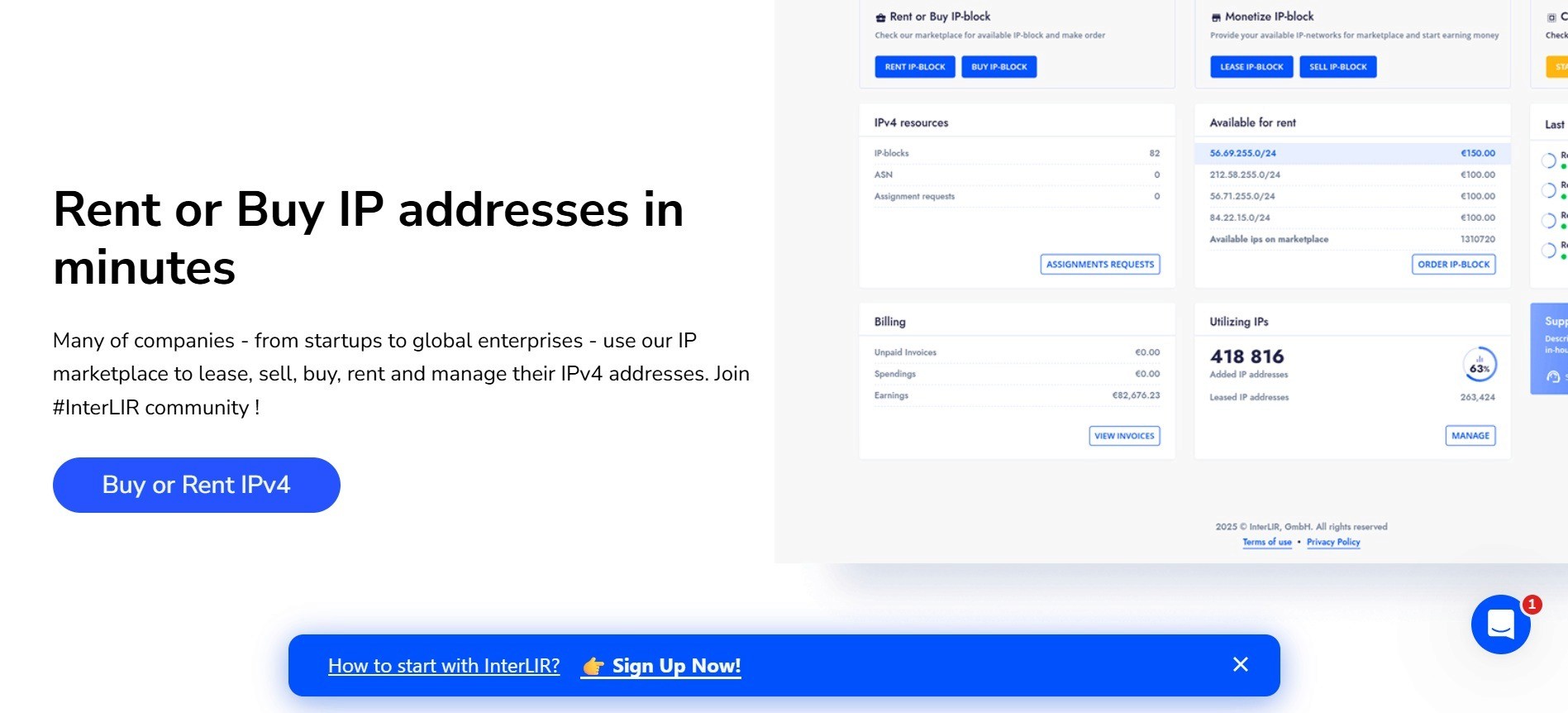
InterLIR Overview: What It Does Well
Let's be clear up front, because it's important: InterLIR is a solid platform, and a few of its strengths are real differentiators in their own right.
InterLIR (operating as InterLIR GmbH, based in Berlin) is a RIPE NCC-registered IPv4 marketplace and broker. That registration is a genuine mark of formal legitimacy in the RIPE community, and it's worth acknowledging plainly. The platform supports the full transaction set - you can lease, buy, sell, and rent IPv4 space - and it operates across multiple registries, not just RIPE. Coverage spans the RIPE, ARIN, APNIC, and LACNIC regions, with AFRINIC also in the mix.
Block sizes run from /24 up to /16, which keeps it accessible to smaller operators rather than only enterprise buyers, and delivery is fast: networks are typically served within 24 hours of a request.
On compliance, InterLIR is strong. Incoming blocks are screened against industry blacklists at onboarding, and the platform runs ongoing abuse monitoring on networks in use, processing complaints through official channels. For compliance-sensitive use cases, that matters, and it's not something to wave away.
Finally, InterLIR offers something many marketplaces don't: sponsoring ORG and ASN registration services. If you don't have your own LIR, InterLIR can act as your sponsor for an ASN registration in RIPE. That's a meaningful plus for operators who need the full package and don't want to become a RIPE member themselves.
Who InterLIR fits best: operators without their own LIR who need sponsoring and ASN services; compliance-sensitive buyers who value heavy abuse monitoring; and anyone who specifically wants multi-RIR reach or prefers a more hands-on, managed relationship rather than running everything themselves.
InterLIR Pricing and Service Model
This is where the picture is more nuanced than older write-ups suggest. InterLIR Global now publishes indicative pricing - /24 blocks starting from roughly €99 to €110 per month - and markets "no hidden fees" with automated LOA assignment. So pricing visibility is no longer the differentiator it might once have been.
The more important detail is the shape of the service, especially for IP owners. InterLIR's lease-out model is a managed one. When you list a block to lease out, InterLIR handles tenant management, collects payments on your behalf, and can set up Route and rDNS objects for you. Owners receive roughly 80-85% of rental income, with InterLIR retaining a 15-20% service fee. Payouts are sent to your bank account on request.
On the transaction side, InterLIR has historically charged no commission on transfers, with buy/sell handled through full-service support at each stage (contract preparation, payment security, and the transfer process itself).
The takeaway: InterLIR's economics are reasonably transparent, but the model is managed rather than self-service. You're handing the platform the operational work - and, for owners, a slice of the revenue - in exchange for not having to run the listing yourself. Whether that trade is worth it is exactly the question that sends some operators looking elsewhere.
Why Operators Look Beyond InterLIR
To repeat the point, because it shapes everything below: people rarely leave InterLIR because it's bad. They leave because the model doesn't match how they want to operate. Here's where the friction tends to show up.
Self-service vs managed control
InterLIR's strength - it handles things for you - is also its constraint. If you'd rather not have a platform managing your orders, collecting your payments, and standing between you and your tenants, a managed broker model can feel like a loss of control. Operators who've grown comfortable with the mechanics of IPv4 often want a self-service marketplace where they're in the driver's seat: list a subnet, set the terms, manage it from a dashboard, done.
Owner autonomy over your listings
In a managed approach, your listing is, to a degree, the platform's listing. In a direct marketplace, it's yours. You decide the price, the term, and the conditions, and you can adjust them. For owners who treat their address space as an asset to be actively managed rather than parked, that autonomy is the whole point.
Owner economics: set-your-own-price vs a fixed payout band
This is the honest version of the "money" question. InterLIR's owner model returns 80-85% of rental income with a 15-20% service fee taken on a managed basis. A direct marketplace flips the framing: you set your own price, and the platform's terms are listed and predictable rather than bundled into a managed-service cut. At small volumes the difference is modest. At scale - a /22 or a /20 leased over years - the gap between a managed-pool payout and direct, owner-set monetization can be meaningful. Run the numbers on your specific blocks before assuming they're equivalent.
RIPE-first focus vs broad multi-RIR
InterLIR's multi-RIR coverage is a genuine strength if you need ARIN or APNIC space. But breadth has a cost: a platform spread across five registries isn't built specifically around the RIPE region's particular workflows, hold periods, and member realities. If RIPE is where you actually operate, a RIPE-first platform can fit the grain of your work more cleanly.
The self-service experience
A managed broker is optimized around a relationship and a support team. A self-service marketplace is optimized around a dashboard you use without waiting on anyone. Neither is "better" in the abstract - but if you want to list a block at 11pm and have it live without a back-and-forth, the self-service experience is what you're after.
What to Look for Before You Switch
Because InterLIR and the closest alternatives are genuinely comparable, the decision comes down to a handful of granular factors. Before you move, weigh these:
Self-service depth. Can you list, price, and manage a subnet end-to-end yourself, or does the platform run it for you? Decide which you actually want.
Owner economics. Compare the all-in model: managed payout band (e.g., 80-85% after a service fee) versus owner-set pricing with listed platform terms. Model it against your real block sizes and lease durations.
RIPE compliance. RPKI, ROA, and LOA support are table stakes. Confirm they're handled cleanly and automatically.
Scope. Do you only need to lease, or do you also want to buy, sell, and monetize idle space in one place? A leasing-only tool will eventually send you elsewhere.
Sponsoring and ASN needs. If you specifically need a sponsoring LIR or ASN registration, that narrows the field fast - and it's an area where InterLIR is genuinely strong.
See exactly what you pay - and exactly who you're dealing with. IPbnb is a RIPE-focused IPv4 leasing platform: published lease prices, verified address space, and one contract with IPbnb. Browse available subnets →
Platform Comparison: InterLIR vs. Top Alternatives
Platform | Model | RIPE NCC registered | Compliance support | Self-service | Pricing / owner economics | ASN / sponsoring services |
IPbnb | RIPE leasing platform | RIPE-region focused* | RPKI / ROA / LOA | Full | Owner-set pricing, listed platform terms | Support offered |
InterLIR | Marketplace + managed broker | Yes (RIPE NCC) | Blacklist scanning + ongoing abuse monitoring | Partial (managed) | /24 from ~€99-110/mo; owners keep 80-85% (15-20% service fee) | ASN registration + sponsoring ORG |
IPXO | Automated leasing (managed pool) | Multi-RIR incl. RIPE | Automated | Full | 5% owner fee; min ~$9/mo per /24 renter fee | Not offered |
IPv4.Global | Auction + brokerage | Multi-RIR | Standard | Full (auction) | Seller-paid fees; auction-based pricing | Not offered |
Prefixx | Boutique managed broker | Registered (RIPE NCC, ARIN, APNIC) | White-glove (blacklist, RPKI, geo, rDNS) | No | No-win-no-fee; 3-8% seller-paid | Not a focus |
LogicWeb | Direct provider (own inventory) | RIPE / ARIN inventory | Standard + RPKI/ROA | Full | No setup fee, month-to-month | Not offered |
Top 5 InterLIR Alternatives
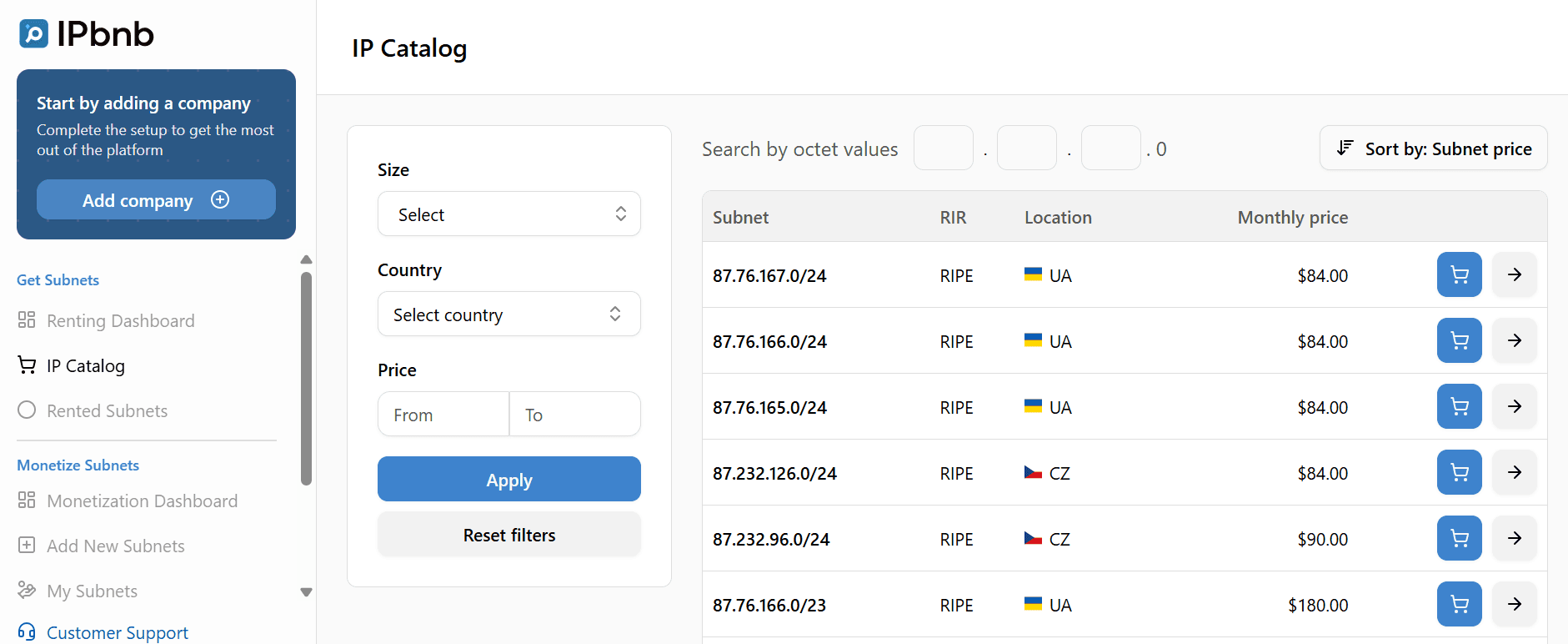
1. IPbnb - self-service RIPE leasing platform, owner control, transparent terms
IPbnb is the closest like-for-like alternative to InterLIR in model, and the sharpest contrast in execution. It's a self-service IPv4 leasing platform built around the RIPE region, where IP owners list their own subnets with defined terms and renters see exactly what they're leasing, from whom, and under what conditions. That "direct marketplace" structure is the core difference: where a managed model aggregates inventory and runs it for you, IPbnb keeps the relationship direct and the control in the owner's hands.
For owners, that means you set your own price rather than accepting a managed-pool payout, you control your listing, and you can monetize idle space on your own terms. RPKI, ROA, and LOA are handled as part of the workflow, so "direct" doesn't mean "do the compliance plumbing yourself." For renters, it means clean space on flexible terms without the opacity of leasing from an anonymous pool - you can see the subnet's terms and source before you commit.
Crucially, IPbnb is a full-spectrum platform, not a leasing-only tool. You can lease, buy, sell, and monetize IPv4 in one place, which means you don't outgrow it the moment your needs shift from "I need space" to "I want to sell or monetize space."
The honest boundaries: IPbnb is RIPE-region focused, so if your operations live primarily in ARIN or APNIC, a multi-RIR platform like InterLIR will serve you better. And if you specifically need a sponsoring LIR or ASN registration, that's not IPbnb's focus - it's a leasing platform, not a sponsoring LIR.
Best for: RIPE-region operators and owners who want full self-service control, owner-set pricing, and the ability to lease, buy, sell, and monetize without switching platforms.
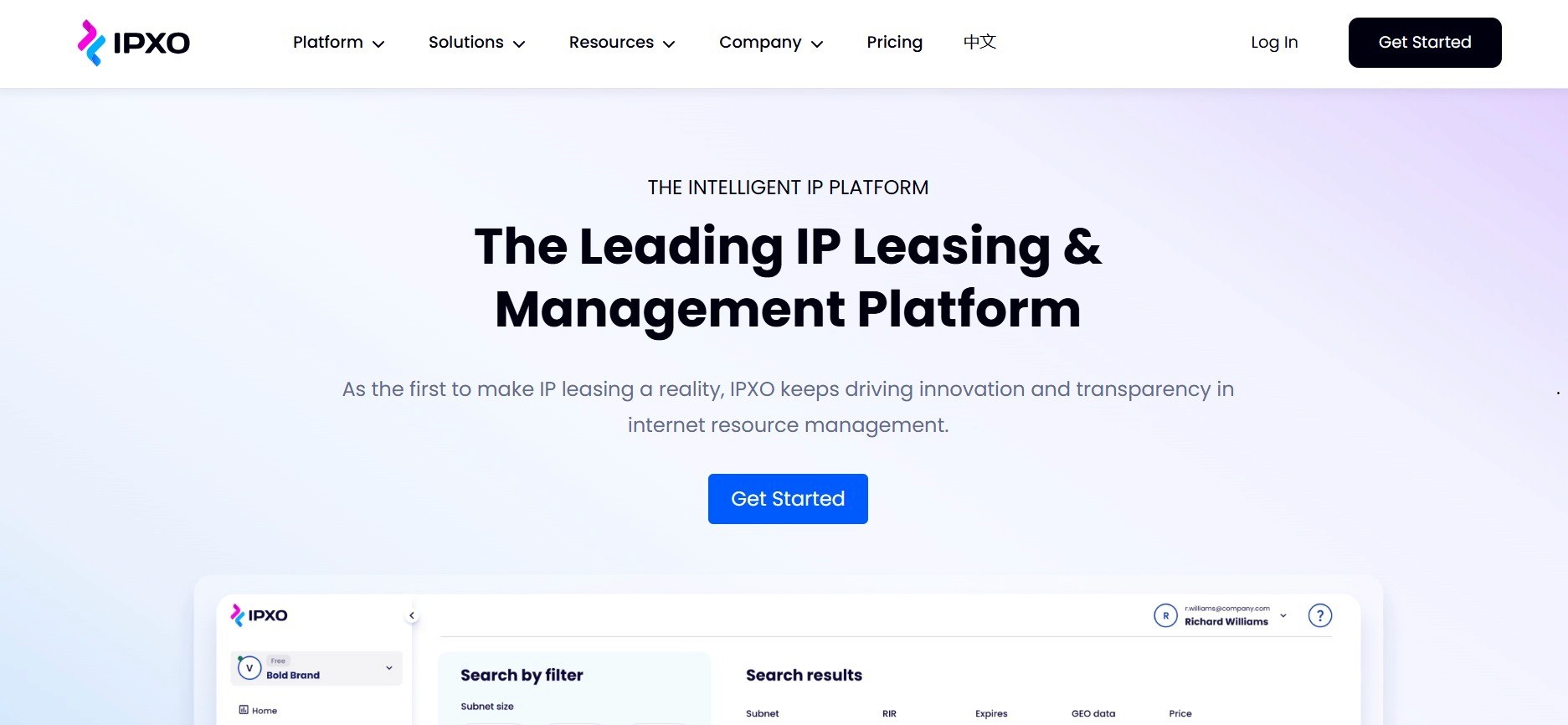
2. IPXO - automated leasing at scale, multi-RIR
IPXO launched in 2020 as an automated IPv4 leasing platform and has scaled to manage well over 10 million addresses. Its strength is breadth and automation: a large, multi-region inventory with a heavily automated leasing workflow. Pricing is published and predictable - a 5% fee on owner revenue, and a minimum renter platform fee of around $9 per month per /24.
The structural trade-off is that IPXO runs as a managed pool: you lease from aggregated inventory, and you generally don't know whose space you're using (and owners don't know who's using theirs). For high-volume, multi-region leasing where inventory breadth is the priority, that's a fair trade. If you want a direct relationship and the ability to buy, sell, and monetize - not just lease - it's a limitation. For a deeper look, see our IPXO alternatives comparison.
Best for: operators who need large-scale, automated leasing across multiple RIR regions and value maximum inventory breadth.
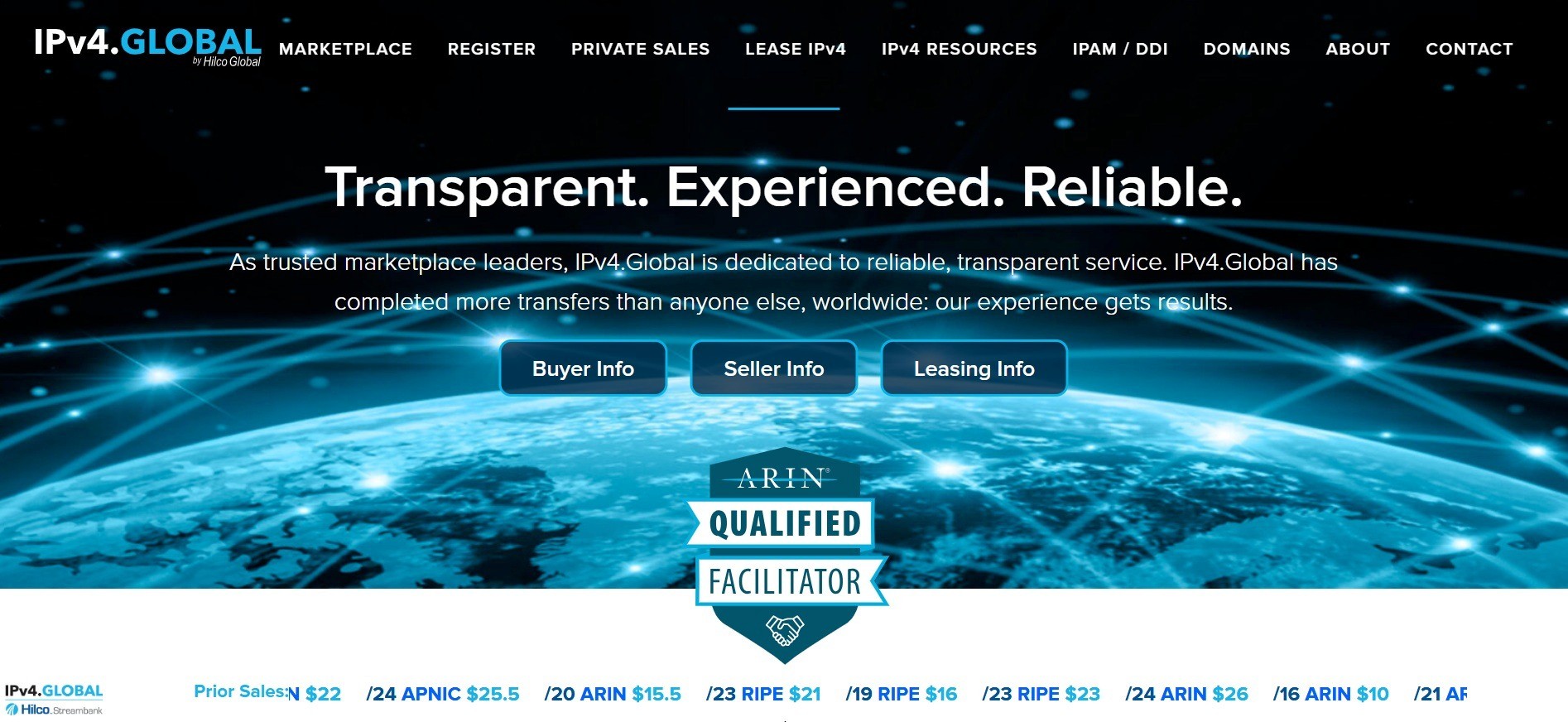
3. IPv4.Global - auction-based marketplace and brokerage, large blocks
IPv4.Global (part of Hilco Global) is one of the most established names in the space and claims more completed transfers than any other provider. Its model is distinct: an online auction platform for /17s and smaller, plus a private brokerage arm for large blocks (/17 to /8 and up). It publishes historical sale data, which is genuinely useful for price discovery, and fees are generally paid by the seller, so buyers face no hidden add-ons. It has also added leasing.
If your priority is buying or selling larger blocks - or you want auction-driven price transparency and the credibility of a high-volume broker - IPv4.Global is a strong fit. It's less oriented toward owner-controlled, self-service leasing of smaller RIPE blocks. See our IPv4.Global alternatives guide for more.
Best for: larger-block buyers and sellers who want auction-based price discovery and deep brokerage experience.
4. Prefixx - boutique broker, white-glove, no-win-no-fee
Prefixx is a boutique IPv4 brokerage founded in 2018 (with a team active in the industry since 2007), headquartered in Miami, and registered with ARIN, RIPE NCC, and APNIC, with LACNIC facilitated. Its calling card is a no-win-no-fee model: commission of 3-8% (depending on block size) is paid by the seller only, buyers pay nothing in broker fees, and transactions run through escrow. Every deal includes white-glove service - blacklist scanning, geolocation correction, RPKI setup, and reverse DNS management - at no extra cost. It also supports long-term leases, with availability secured up to 36-60 months.
The honest caveat is right there in the model: Prefixx is not a self-service platform. You work with senior consultants who manage the process end-to-end. That's exactly what some operators want for complex or high-value transactions - and exactly what others are trying to get away from.
Best for: buyers and owners who want a hands-on, managed broker with full compliance support and don't need self-service.
5. LogicWeb - direct provider, monthly flexibility, no setup fee
LogicWeb is a direct IP leasing provider (not a marketplace) that's been operating since 2004 and manages over 500,000 IPv4 addresses, with clients including NordVPN, ExpressVPN, CyberGhost, and Private Internet Access. It leases on a month-to-month basis with no contracts and no setup fees, with same-day LOA delivery, plus WHOIS and geolocation updates and RPKI/ROA setup on non-legacy subnets included as standard.
The structural constraint is that the inventory is LogicWeb's own - there's no marketplace dynamic, no third-party listings, and no buying, selling, or owner monetization. If you need clean space fast on flexible terms, it's an excellent option. If you want to monetize space or transact, you'll need to go elsewhere.
Best for: operators who need quick, no-commitment direct leasing and don't need marketplace or monetization features.
How to Choose
There's no single "best" platform - only the best fit for how you operate. A few scenarios to anchor the decision:
You want full control and own-the-listing economics, in the RIPE region. Go with IPbnb. A self-service leasing platform where you set your price and can lease, buy, sell, and monetize is the natural home for an owner who wants to actively manage address space.
You need large-scale automated leasing across many regions. IPXO is the strong default - breadth and automation are its whole proposition.
You're buying or selling a large block. IPv4.Global brings auction-based price discovery and the deepest brokerage track record.
You want someone to manage a complex transaction end-to-end. Prefixx offers white-glove, no-win-no-fee brokerage with escrow and full compliance support.
You need clean space quickly, no strings attached. LogicWeb delivers fast, no-contract, no-setup-fee leasing from its own inventory.
You specifically need sponsoring and ASN registration, or multi-RIR reach. This is where staying with InterLIR genuinely makes sense - it's one of its real strengths.
Frequently Asked Questions
Is InterLIR a legitimate IPv4 marketplace?
Yes. InterLIR (InterLIR GmbH, based in Berlin) is a RIPE NCC-registered IPv4 marketplace and broker, supporting leasing, buying, and selling across the RIPE, ARIN, APNIC, and LACNIC regions, with abuse monitoring and 24/7 support. Its RIPE NCC registration and compliance practices are genuine strengths.
What fees does InterLIR charge?
InterLIR publishes indicative lease pricing (/24 blocks starting from roughly €99-110 per month) and advertises no hidden fees. For owners leasing out space, InterLIR operates a managed model in which owners receive about 80-85% of rental income, with the platform retaining a 15-20% service fee. Transfers have historically carried no commission.
Does InterLIR offer ASN registration?
Yes. InterLIR can act as a sponsoring organization for ASN registration in RIPE if you don't have your own LIR. This is a notable advantage over marketplaces that focus only on address transactions, and a reason some operators choose it.
InterLIR vs IPbnb - which is better for RIPE operators?
It depends on how you want to operate. InterLIR is a managed marketplace and broker with multi-RIR coverage and sponsoring/ASN services. IPbnb is a self-service RIPE-region leasing platform where owners set their own prices, control their listings, and can lease, buy, sell, and monetize in one place. If you want hands-on management or multi-RIR/sponsoring services, InterLIR fits. If you want full self-service control and owner-set economics in the RIPE region, IPbnb is the closer match.
Can I monetize idle IPv4 on InterLIR?
Yes - through InterLIR's managed lease-out model, where the platform handles tenants and payments and you receive a payout (about 80-85% of rental income). If you'd rather set your own price and monetize on a self-service platform, IPbnb is built around that approach. You can explore monetization options here.